
If your vision seems perfectly clear, it may be easy to assume that diabetes isn’t affecting your eyes.
Unfortunately, diabetic eye disease doesn’t always give you an early warning.
Changes can begin inside the eye before you notice blurry vision, floaters, or other symptoms.
How Does Diabetes Affect the Eyes?
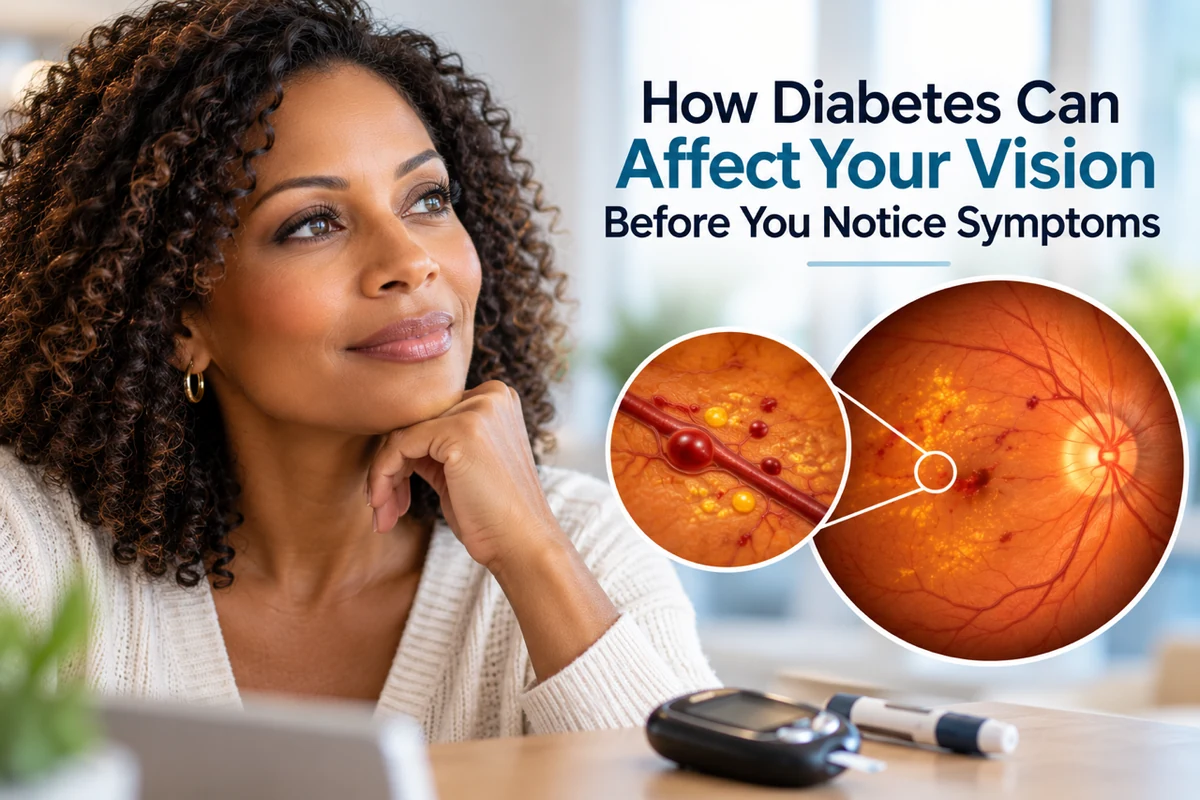
Over time, high blood sugar can damage blood vessels throughout the body, including the tiny blood vessels that supply the retina.
The retina is the light-sensitive tissue at the back of the eye.
When diabetes damages retinal blood vessels, a condition called diabetic retinopathy can develop.
In its early stages, weakened retinal blood vessels may develop tiny bulges or begin leaking fluid. These changes can be seen during an eye examination even though the person has not noticed a difference in vision.
Why Can Your Vision Still Seem Normal?
Early diabetic retinopathy often has no noticeable symptoms.
You may still be able to read, drive, work, and see clearly while changes are developing in the retina.
That means waiting until your vision becomes blurry is not a reliable way to know whether diabetes is affecting your eyes.
What Symptoms Can Develop Later?
Symptoms may include:
- Blurry or fluctuating vision
- Dark spots or floaters
- Areas of missing or distorted vision
- Difficulty reading or seeing fine details
- Changes in color vision
- Reduced vision
Sudden changes in vision, a sudden increase in floaters, flashes of light, dark areas in your vision, or significant vision loss should be evaluated promptly.
Diabetes Can Affect Vision in More Than One Way
Diabetic retinopathy is not the only way diabetes can affect your eyes.
Changes in blood sugar can sometimes temporarily affect the eye’s natural lens, causing vision to become blurry or fluctuate.
Diabetes is also associated with an increased risk of other eye conditions, including cataracts and glaucoma.
What Does an Eye Doctor Look For?
During a comprehensive dilated eye examination, your eye doctor can examine the retina and look for damaged or leaking blood vessels and other signs of diabetic eye disease.
Depending on what is found, additional imaging or testing may be appropriate.
Finding these changes early matters because diabetic retinopathy can be monitored and, when necessary, treated before more significant vision loss occurs.
How Can You Help Protect Your Vision?
Managing blood sugar, blood pressure, and cholesterol according to your healthcare team’s recommendations can help protect your overall vascular and eye health. Avoiding smoking is also important.
Regular eye examinations are another essential part of diabetic eye care.
At North Columbus Eye Center, we provide comprehensive eye care for patients with diabetes, including evaluation of the retina and other structures that can be affected by the disease.