
Have headlights started looking brighter than they used to? Do you notice halos or starbursts around streetlights? Has driving at night become more difficult?
These changes can have several causes, but they are also common symptoms of cataracts.
What Is a Cataract?
Inside your eye is a natural lens that helps focus light onto the retina at the back of the eye.
A healthy natural lens is normally clear. As we age, proteins and fibers within the lens change, causing it to gradually become cloudy. This clouding of the natural lens is called a cataract.
Cataracts usually develop slowly, so you may not notice a significant change in your vision at first.
As a cataract progresses, you may experience:
- Blurry or hazy vision
- Increased sensitivity to bright light
- Glare
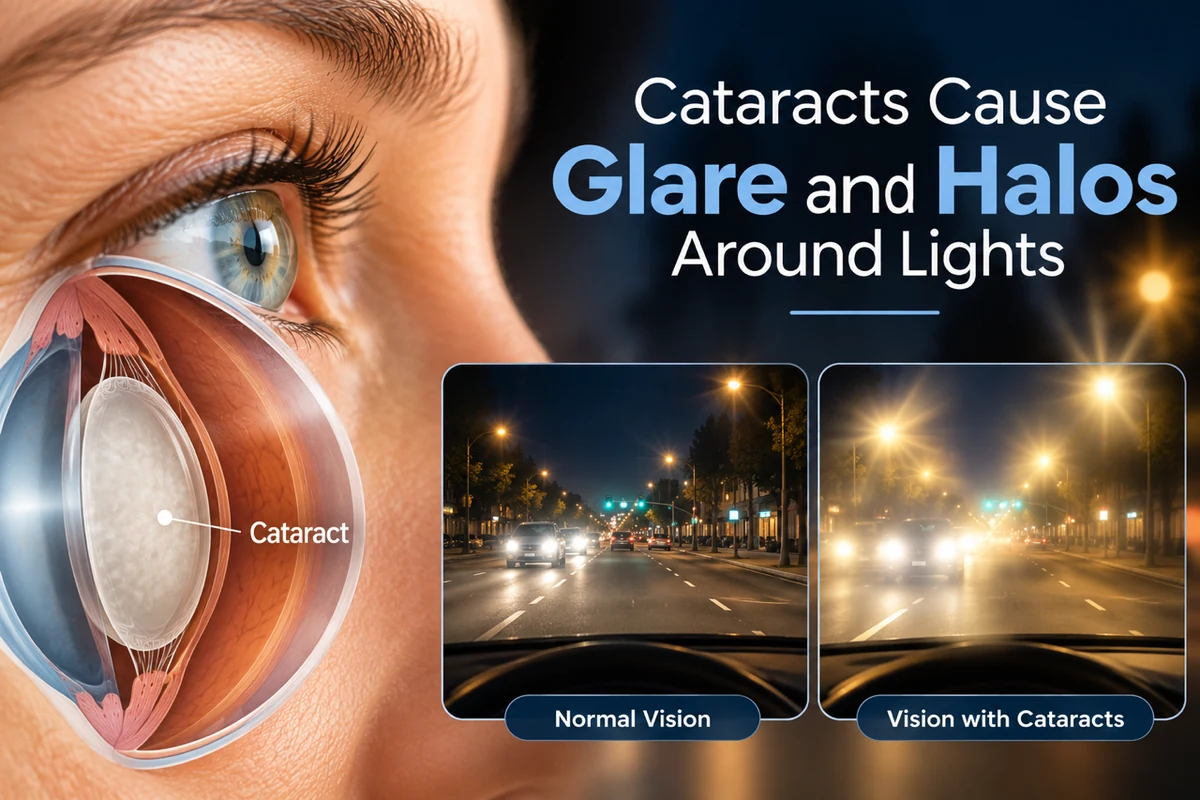
- Halos or starbursts around lights
- Difficulty seeing at night
- Colors appearing less vivid
Why Do Cataracts Cause Glare and Halos?
A cataract changes the way light travels through your eye.
Think about looking through a clean windshield compared with one that is foggy. Through clear glass, lights look sharp and well defined. Through a foggy windshield, light scatters and spreads.
Something similar happens when the natural lens becomes cloudy.
Instead of light passing cleanly through the lens and focusing on the retina, some of it becomes scattered.
This can make bright lights seem unusually intense or uncomfortable, which we experience as glare. The scattered light can also spread around a light source, creating halos or starbursts.
These effects may be especially noticeable around:
- Oncoming headlights
- Streetlights
- Traffic signals
- Bright indoor or outdoor lights
Why Is It More Noticeable at Night?
Glare and halos can become particularly noticeable at night because bright headlights and streetlights appear against a dark background.
This contrast makes scattered light more obvious and can make it harder to see road markings, signs, pedestrians, or objects surrounding the bright light.
For some people, difficulty driving at night is one of the first noticeable ways a cataract begins affecting everyday vision.
Are Glare and Halos Always Cataracts?
No.
Although glare and halos are common with cataracts, other eye conditions can cause similar symptoms. Dry eye, prescription changes, and problems involving the cornea can also affect how light appears.
A comprehensive eye examination is the best way to determine what is causing the change.