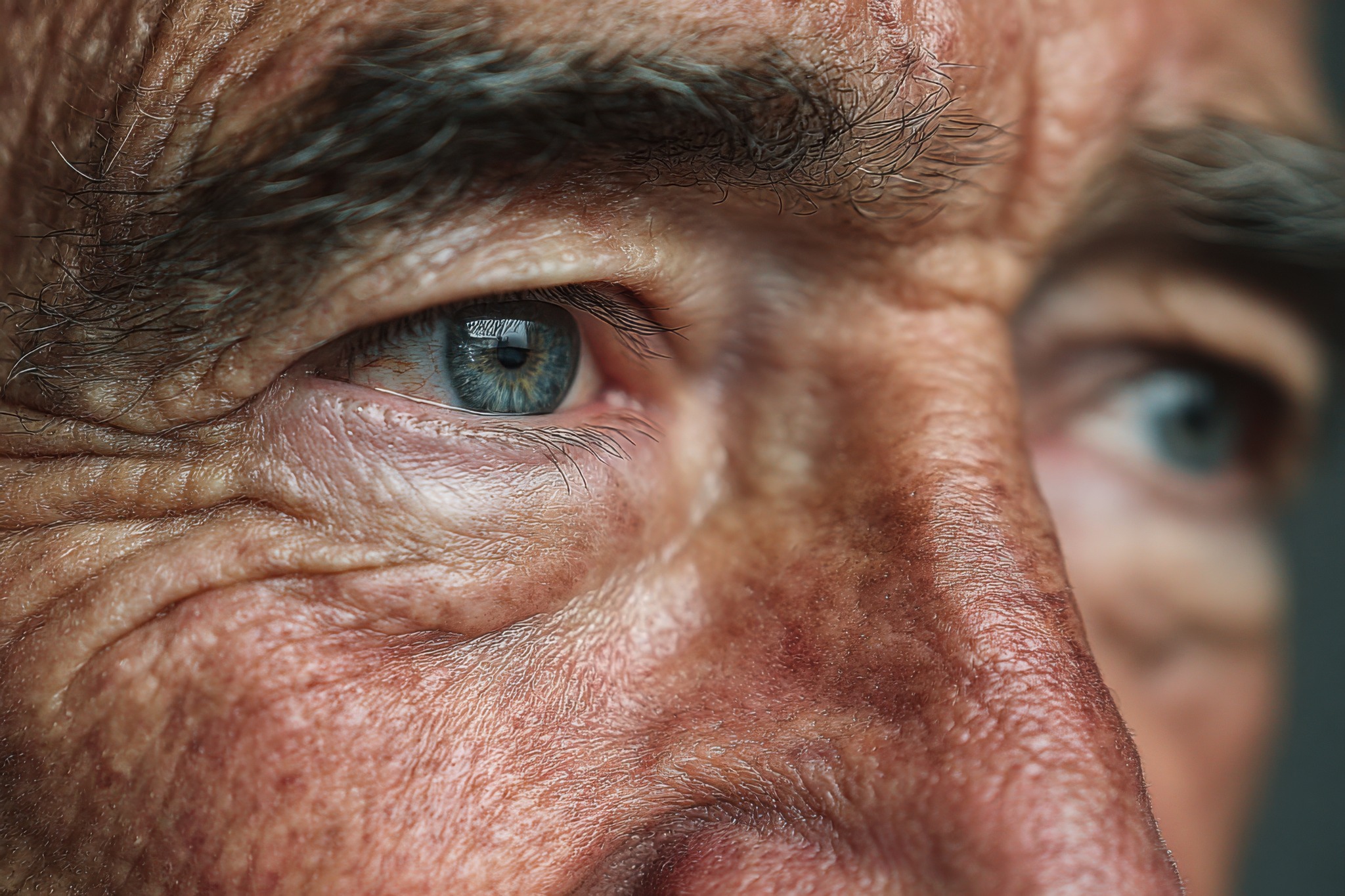

If you’ve reached your 40s and suddenly find yourself holding your phone farther away, increasing the font size on your screen, or struggling to read a restaurant menu, you’re not alone. Difficulty seeing things up close becomes increasingly common as we get older—even for people who have never needed glasses before.
For many people, these changes become noticeable sometime in their early to mid-40s.
Why Does This Happen Around Age 40?
Your eyes have an impressive ability to change focus throughout the day. When you look from something across the room to a text message in your hand, your eyes adjust so the closer object comes into focus.
As we get older, that near-focusing ability gradually decreases. This normal age-related change is called presbyopia.
Presbyopia doesn’t usually appear overnight. The changes occur gradually, but there eventually comes a point when you begin noticing them during everyday activities.
You may find yourself:
- Holding your phone farther away to read it
- Increasing the font size on your devices
- Needing brighter light to read
- Having trouble with menus or other small print
- Experiencing tired eyes after prolonged close work
- Taking your glasses on or off to see certain distances more comfortably
You may still see perfectly well across the room or while driving. It is often close-up vision that becomes frustrating first.
Why Do Reading Glasses Help?
Reading glasses provide additional focusing power for close-up tasks. They make it easier to see nearby objects without your eyes having to work as hard to bring them into focus.
Some people initially need readers only for very small print or in dim lighting. Others begin keeping pairs in multiple places because they find themselves reaching for them more frequently.
The strength needed for comfortable reading can also change over time.
Will Wearing Readers Make My Eyes Weaker?
No. Reading glasses do not make your eyes weaker, and wearing them does not cause your near vision to deteriorate faster.
This misconception often develops because people begin using readers and then notice that they need them more frequently a few years later.
The glasses didn’t cause the change. Your eyes were continuing through the normal aging process during that time.
What If I’ve Always Had Excellent Vision?
You can have excellent distance vision and still eventually need help seeing up close.
In fact, needing reading glasses for the first time can be particularly surprising for someone who has never worn glasses or contact lenses.
Presbyopia eventually affects nearly everyone to some degree. People who already wear glasses or contacts experience it as well, although the way they notice the change can differ depending on their existing prescription.
Are Drugstore Reading Glasses Enough?
For some people, over-the-counter readers may provide adequate help for certain close-up activities. However, they use the same power in both lenses and don’t account for differences between your two eyes, astigmatism, or other vision needs.
If you’re noticing a new change in your vision, an eye examination is a good opportunity to determine exactly what is causing it rather than simply assuming you need stronger readers.
Don’t Assume Every Vision Change Is Because of Age
Difficulty reading after 40 is extremely common, but aging isn’t the only reason vision can change.
Changes in your prescription, dry eye, cataracts, and certain eye conditions can also affect how clearly or comfortably you see.
Regular comprehensive eye examinations become especially important as you get older because they evaluate more than how well you can read an eye chart. They also allow your eye doctor to examine the health of your eyes.
Sudden vision loss, new flashes or floaters, significant eye pain, double vision, or another sudden change in eyesight should be evaluated promptly rather than assumed to be a normal part of aging.
When the Menu Starts Moving Farther Away
If you suddenly need to stretch your arm a little farther to read your phone, your arms aren’t getting shorter. Your near vision is changing.
For most people, needing reading glasses after 40 is simply one of the normal ways vision changes with age.
At North Columbus Eye Center, a comprehensive eye examination can help determine why your vision has changed and whether reading glasses, an updated prescription, or another vision correction option may be appropriate for your eyes and lifestyle.