
If reading small print has become more difficult, your phone seems clearer when you hold it farther away, or close-up work makes your eyes tired, you may be experiencing presbyopia.
Presbyopia is a normal age-related change in the eye’s ability to focus on nearby objects. It typically becomes noticeable sometime after age 40 and eventually affects nearly everyone.
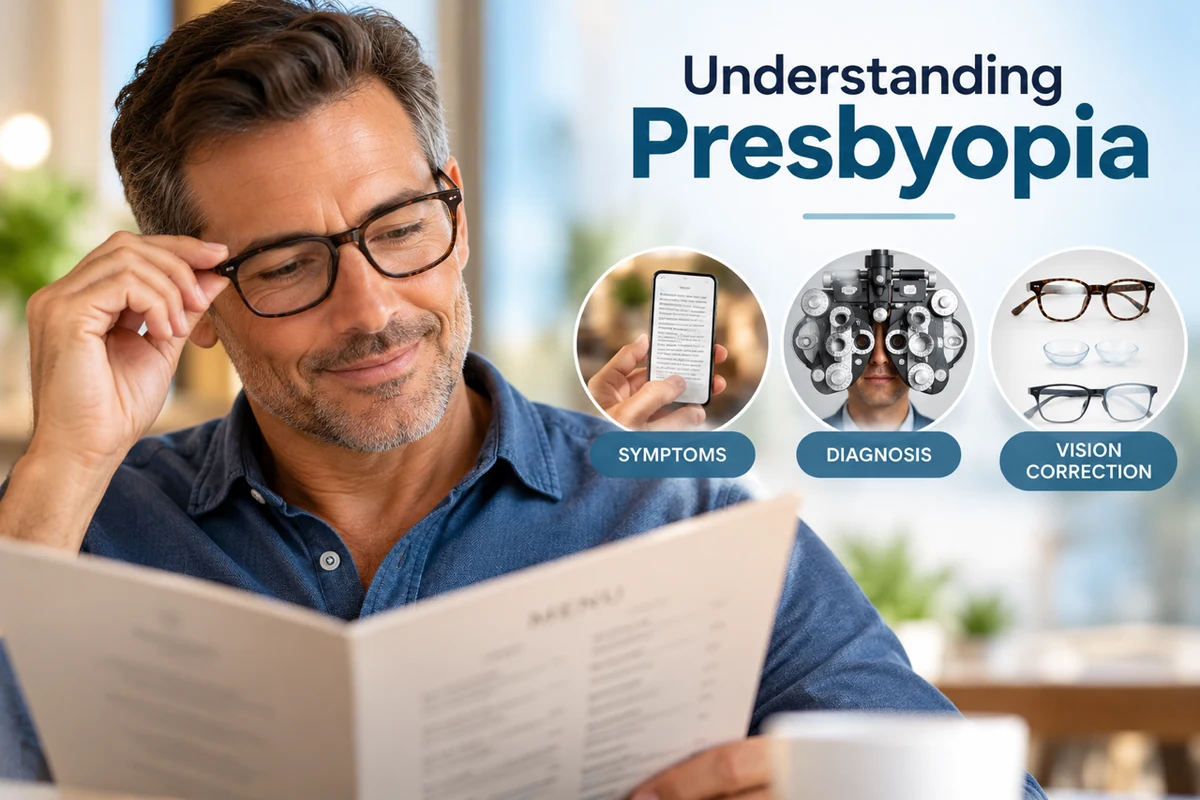
What Is Presbyopia?
When you’re younger, the natural lens inside the eye is flexible enough to adjust as you look between objects at different distances.
With age, the lens gradually becomes less flexible, making close focusing more difficult.
This loss of near-focusing ability is called presbyopia.
Presbyopia is not an eye disease. It is part of the normal aging process.
What Are the Symptoms?
Common signs include:
- Difficulty reading small print
- Holding reading material farther away
- Needing brighter lighting for close work
- Increasing the font size on phones or tablets
- Eye strain after reading or computer work
- Headaches after prolonged close-up activities
- Difficulty transitioning between near and distance vision
Symptoms can become more noticeable when you’re tired or trying to read in dim lighting.
Is Presbyopia the Same as Farsightedness?
No.
Farsightedness, or hyperopia, is a refractive error related to how light focuses within the eye.
Presbyopia is an age-related reduction in the eye’s ability to adjust its focus for nearby objects.
It is possible to have presbyopia along with nearsightedness, farsightedness, or astigmatism.
How Is Presbyopia Diagnosed?
Presbyopia can be identified during an eye examination.
Your eye doctor can evaluate your distance and near vision, determine whether your prescription has changed, and examine the health of your eyes.
This is important because difficulty reading isn’t always caused solely by presbyopia. Dry eye, cataracts, prescription changes, and other eye conditions can also affect vision.
What Are the Vision Correction Options?
Depending on your eyes, prescription, lifestyle, and visual goals, options may include:
Reading glasses: Readers provide additional focusing power for close-up activities.
Prescription glasses: Bifocals, progressive lenses, or other prescription options can provide vision correction at more than one distance.
Contact lenses: Certain contact lens strategies may help provide functional vision at different distances for appropriate candidates.
Surgical vision correction: Some patients may be candidates for procedures designed to address their vision at multiple distances. Whether a procedure is appropriate depends on eye health, prescription, age, and individual visual goals.
Does Presbyopia Continue to Change?
Near-focusing ability generally continues to change over time before eventually becoming more stable later in life.
That is why someone may start with a relatively mild reading prescription and require adjustments as the years pass.
Needing a stronger reading prescription does not mean wearing glasses made your eyes weaker. It reflects the underlying age-related changes occurring within the eye.
Understanding Your Changing Vision
If you’re beginning to struggle with reading, computer work, your phone, or other close-up activities, a comprehensive eye examination can help determine the cause and discuss your options.
At North Columbus Eye Center, we evaluate your vision, eye health, and individual visual needs before discussing appropriate vision correction options.