
Our Services
Cataract Surgery
See the world more clearly with advanced cataract solutions that help reduce visual limitations and restore confidence.
Restore Clear Vision with Personalized Cataract Care
Cataracts are one of the most common causes of vision changes as we age. As the eye’s natural lens becomes cloudy, everyday activities like reading, driving, and recognizing faces can become more difficult.
At North Columbus Eye Center, we provide comprehensive cataract evaluations and advanced cataract surgery with personalized lens options designed to restore clearer vision and help you return to the activities you enjoy.
What Are Cataracts?
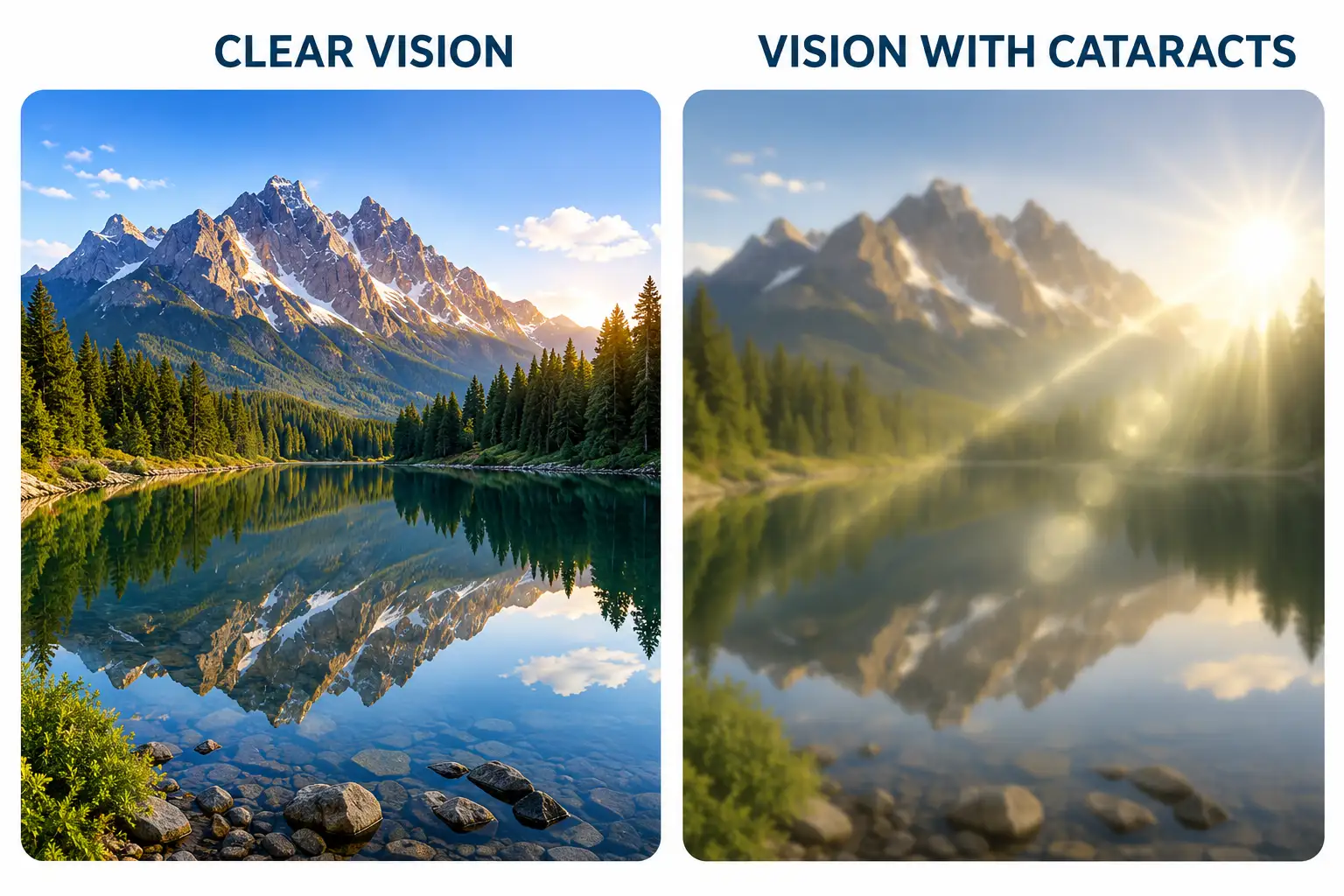
A cataract develops when the eye’s natural lens gradually becomes cloudy. This clouding prevents light from focusing clearly on the retina, causing vision to become blurred, hazy, or dull.
Cataracts typically develop slowly over time and are a natural part of the aging process. While they are common, they do not improve on their own. Cataract surgery is the only effective treatment to restore vision affected by cataracts.
Common Symptoms of Cataracts
Cataracts can affect everyone differently. You may notice:
- Blurred or cloudy vision
- Increased glare from sunlight or headlights
- Difficulty driving at night
- Colors that appear faded or yellowed
- Frequent changes in your glasses prescription
- Double vision in one eye
- Difficulty reading or seeing fine details
If these changes are affecting your daily life, a comprehensive cataract evaluation can help determine whether cataracts are the cause.
Your Cataract Evaluation
Every patient’s eyes and visual needs are unique.
During your cataract evaluation, our team will perform a comprehensive eye examination using advanced diagnostic technology to determine how cataracts are affecting your vision and discuss the best treatment options for your lifestyle.
Your evaluation may include:
- A comprehensive eye examination
- Vision testing
- Detailed measurements of your eyes
- Evaluation of your overall eye health
- Discussion of your visual goals and daily activities
We’ll take the time to answer your questions and help you make an informed decision about your care.
Advanced Cataract Surgery
Cataract surgery is one of the safest and most commonly performed surgical procedures in the world.
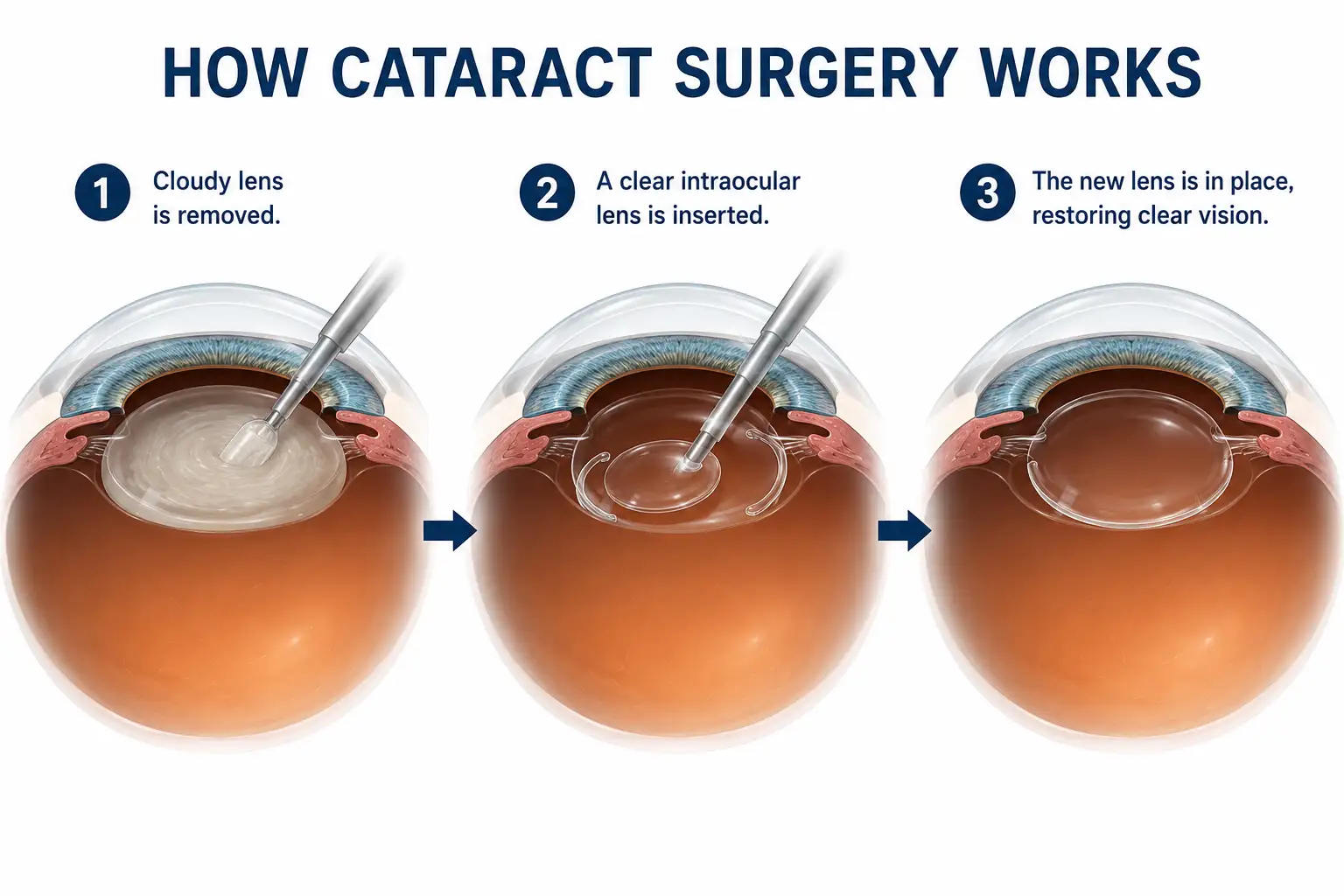
During surgery, the cloudy natural lens is gently removed and replaced with a clear artificial intraocular lens (IOL). The procedure is performed on an outpatient basis and typically takes less than 30 minutes.
Most patients notice improved vision within the first few days, with continued healing over the following weeks.
Personalized Lens Options
One of the most important decisions you’ll make before cataract surgery is selecting your new intraocular lens.
We offer a variety of advanced lens options designed to match your vision goals and lifestyle. Depending on your needs, lens implants may help reduce your dependence on glasses for distance, intermediate, or near vision while also correcting astigmatism when appropriate.
During your consultation, we’ll explain your options and recommend the lens that’s best suited for your eyes and daily activities.
Recovery After Cataract Surgery
Most patients experience a smooth recovery and are able to resume many normal activities within a few days.
Following surgery, you’ll use prescribed eye drops while your eye heals. Our team will monitor your recovery through scheduled follow-up visits and provide detailed instructions to help ensure the best possible outcome.
Cataract FAQ’S
Is cataract surgery painful?
No. Cataract surgery is typically performed using numbing eye drops and medication to help you remain comfortable throughout the procedure.
How long does cataract surgery take?
The procedure itself usually takes about 15 to 30 minutes. You’ll spend additional time at the surgery center before and after your procedure.
Will I need glasses after cataract surgery?
Your need for glasses depends on several factors, including the type of lens implant you choose and your individual visual needs. We’ll discuss your options during your consultation.
How soon will I notice better vision?
Many patients notice improved vision within a few days, although vision continues to stabilize as the eye heals.
Can cataracts come back?
TNo. Once a cataract is removed, it cannot return. Some patients may develop clouding of the membrane behind the lens implant months or years later, which can usually be treated with a quick, painless laser procedure.
Meet Your Cataract Surgeon
26 Years of Ophthalmic Care
Dr. Joseph Ceravolo brings extensive experience in ophthalmic care to cataract and lens surgery.
Dr. Ceravolo evaluates your eye health and vision needs to determine the appropriate surgical approach. If surgery is recommended, your surgical coordinator will explain your lens options, including their potential advantages and limitations, and guide you through preparation, recovery, and at-home postoperative care.
Dr. Ceravolo remains personally involved throughout your surgical care and follow-up.
More than
Cataract Surgeries
Our Blog
Latest News
Stay informed with the latest news, eye care advice, treatment innovations, and aesthetic solutions from our experienced team.

What Is a Cataract—and Why Does It Cause Glare and Halos?
Have headlights started looking brighter than they used to? Do you notice halos or starbursts around streetlights? Has driving at night become more difficult? These changes can have several causes, but they are also common symptoms of cataracts. What Is a Cataract?…

How Diabetes Can Affect Your Vision Before You Notice Symptoms
If your vision seems perfectly clear, it may be easy to assume that diabetes isn’t affecting your eyes. Unfortunately, diabetic eye disease doesn’t always give you an early warning. Changes can begin inside the eye before you notice blurry vision, floaters, or other…

When Floaters May Be a Sign of a Serious Eye Problem
Have you ever noticed a tiny speck, squiggly line, or cobweb-like shape drifting across your vision? These are called floaters, and they are extremely common. In many cases, floaters are related to normal changes inside the eye as we age. However, a sudden change in…