Why does skin feel firm and smooth when we are younger but gradually become thinner, looser, or more lined as we age?
One important part of the answer is collagen.
Collagen is a structural protein that helps give skin strength and support. Our bodies continue producing collagen throughout life, but the balance between making new collagen and breaking down existing collagen changes as we get older.
What Does Collagen Do for Your Skin?
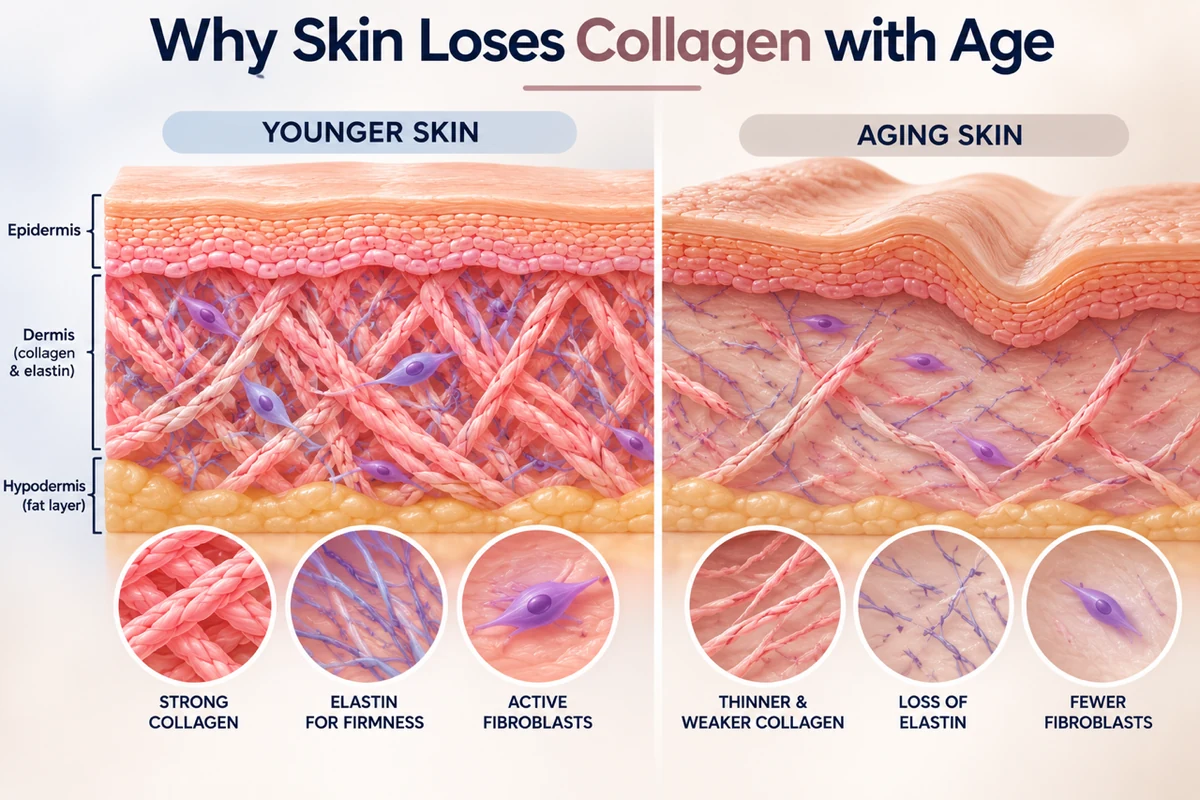
Collagen is one of the major structural components of the dermis, the deeper layer of skin beneath the surface.
You can think of collagen as part of the skin’s internal support network. Along with elastin and other components, it helps maintain structure and resilience.
When we’re younger, collagen is continually produced and remodeled.
With age, that process becomes less efficient.
Why Does Collagen Decrease with Age?
Cells called fibroblasts are responsible for producing collagen and other components of the skin’s supportive framework.
As skin ages, fibroblast activity and the skin’s ability to produce and organize collagen change. Existing collagen fibers also become increasingly fragmented and damaged.
The result is not simply “less collagen.” The collagen network itself becomes less organized and provides less structural support.
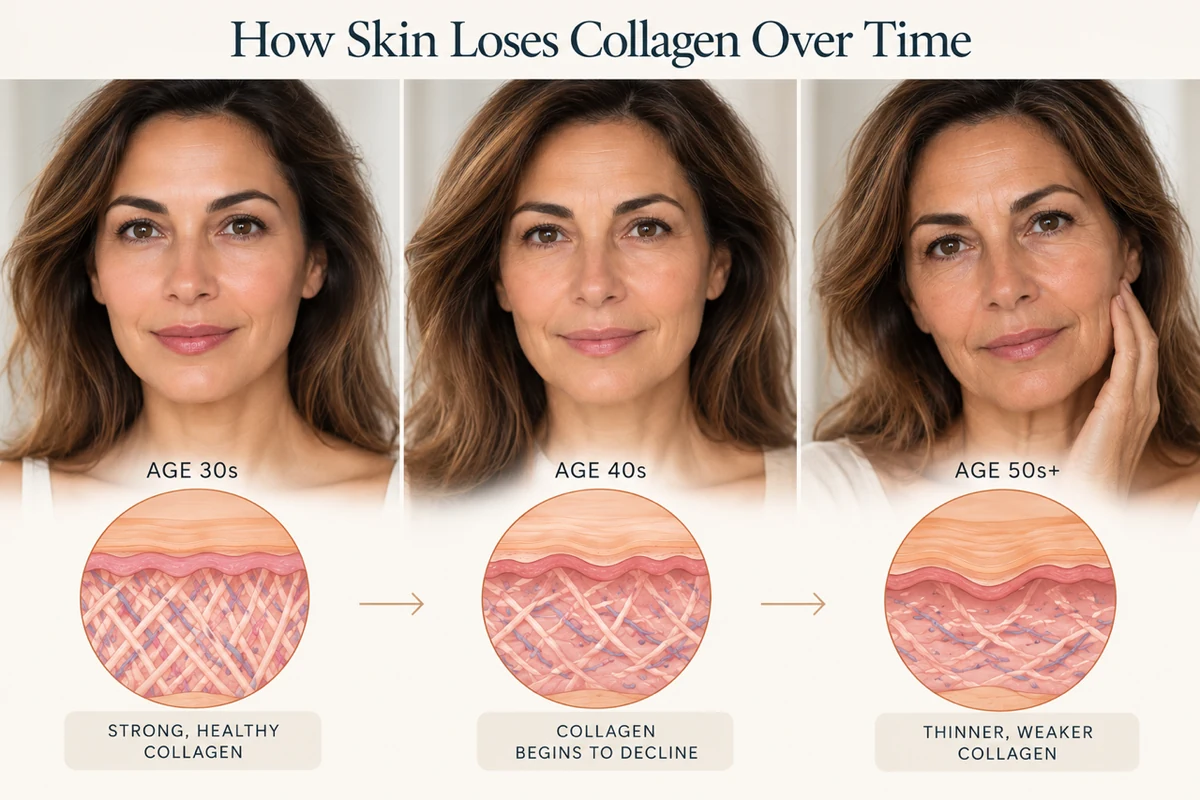
What Does Collagen Loss Look Like?
You may gradually notice:
- Fine lines becoming more visible
- Changes in skin firmness
- Less elasticity or “bounce”
- Changes in texture
- Thinner or more fragile-looking skin
- Wrinkles becoming deeper
Collagen is not the only factor involved. Aging also affects elastin, fat distribution, bone structure, hydration, and other components of the skin and face.
The Sun Can Accelerate Collagen Breakdown
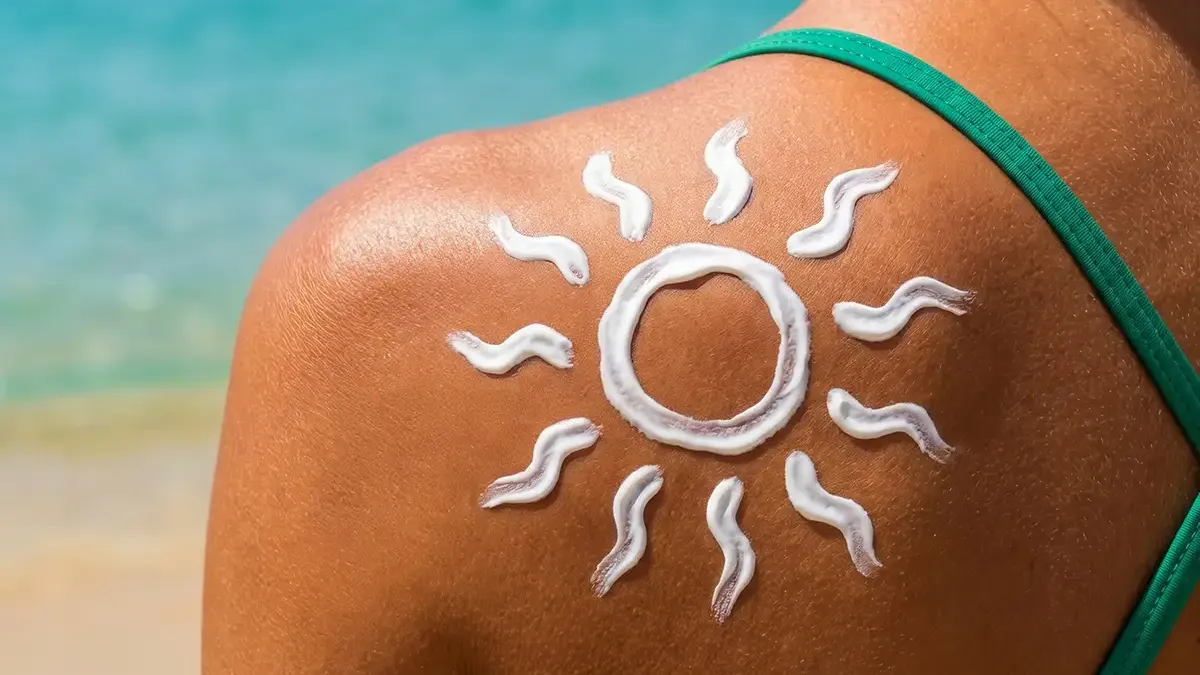
Ultraviolet radiation is a major external contributor to premature skin aging.
Repeated UV exposure can damage collagen and alter the structure of the dermis.
Over time, this process—known as photoaging—can contribute to wrinkles, uneven pigmentation, rough texture, and reduced elasticity.
Daily sun protection therefore does more than help prevent sunburn. It also helps limit cumulative UV damage.
What Else Can Affect Collagen?
Smoking contributes to premature skin aging and collagen degradation.
Hormonal changes can also play a role. In women, declining estrogen associated with menopause can contribute to changes in skin thickness, hydration, elasticity, and collagen.
Genetics, environmental exposure, and lifestyle factors also influence how skin ages.
Can Skin Make New Collagen?
Yes.
Your skin does not completely stop producing collagen as you get older.
Fibroblasts retain the ability to produce collagen, although the skin’s remodeling processes become less efficient.
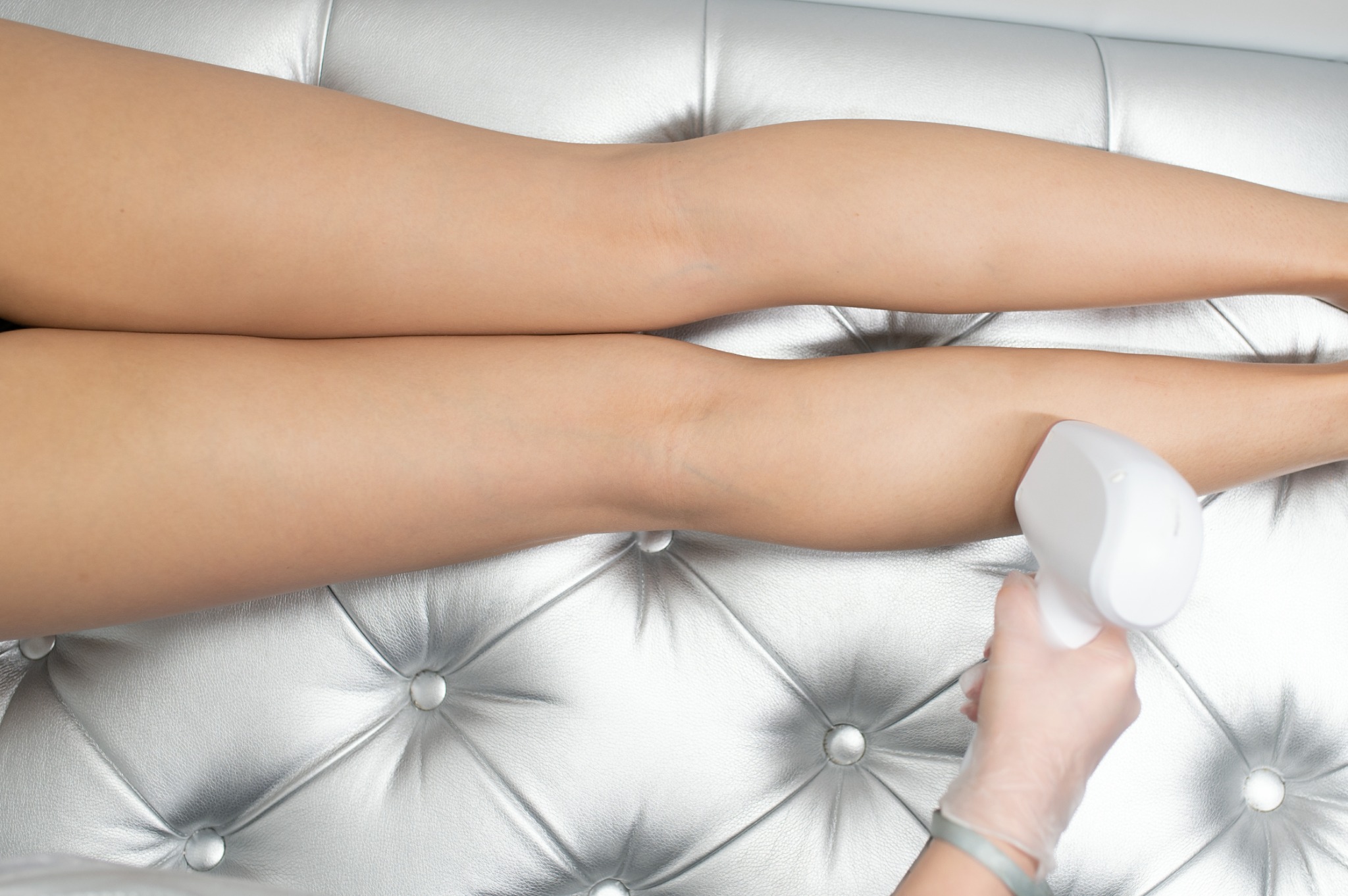
This ability to stimulate collagen production is the basis for several professional skin-rejuvenation treatments.
Because collagen remodeling is a biological process, changes are gradual rather than immediate.
Can Skin Care Prevent Collagen Loss?
No skin-care routine can completely stop normal aging.
However, protecting the collagen you already have is worthwhile.
Consistent broad-spectrum sunscreen helps limit additional UV-related damage. Certain topical ingredients, particularly retinoids, also have evidence supporting improvements in signs of photoaging when used appropriately.
Supporting Aging Skin
Everyone’s skin ages differently.
At North Columbus Eye Center & Medical Aesthetics, a complimentary consultation begins with your individual skin concerns. Alma IQ imaging can provide additional information about characteristics such as pigmentation, redness, pores, and other visible skin features. The goal is not to stop your skin from aging. It is to understand how your skin is changing and choose appropriate ways to care for it over time.